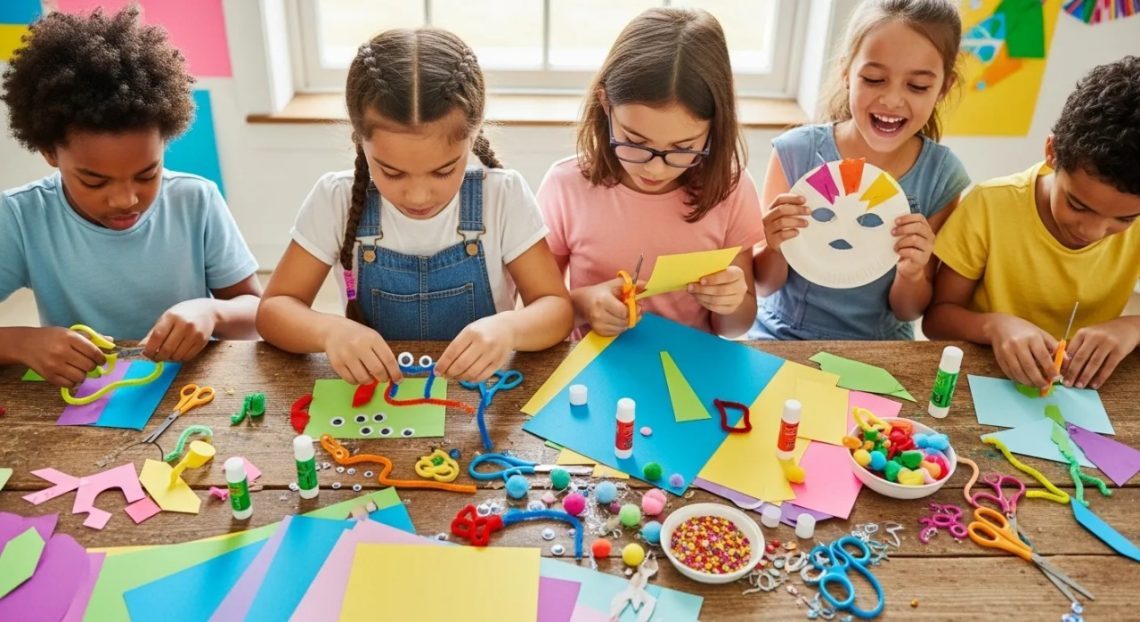
Most children who say they hate maths have never stopped to notice how much of it they already do. A kid building a cardboard city, measuring out strips of tape, or figuring out how to cut a hexagon tile for a mosaic is solving spatial problems that would stump plenty of adults on a test sheet. The setting changes everything. Take away the worksheet and the ticking clock, and the same concepts feel completely different. A child who freezes at a fraction problem will happily calculate whether half a roll of wire is enough to finish a bracelet.
This connection between hands-on making and mathematical thinking is something researchers have been tracking for years, and it isn’t accidental. When children work with physical materials (cutting, folding, measuring, fitting pieces together), they develop number sense, spatial reasoning, and pattern recognition through direct experience rather than memorization. The tactile feedback of real objects gives abstract ideas somewhere to land. Those skills transfer back into formal learning more reliably than skills built through drill alone, which is part of why parents often notice that creative projects and classroom confidence tend to move in the same direction.
Why DIY Projects Work Differently from Worksheets
There’s a specific kind of frustration that comes with staring at a column of numbers. For many kids, that frustration isn’t really about maths; it’s about abstraction. The number five means very little on paper. Five beads arranged to finish a bracelet pattern, or five tiles needed to fill the last row of a mosaic: that’s a quantity a child can see, touch, and fix if they get it wrong.
This is exactly why parents and educators who want to make maths fun often reach for physical materials before they reach for flashcards. The kinesthetic experience of handling objects gives kids a reference point they can return to when the same concept appears in a more formal setting. Sorting beads by color and size is a classification task. Threading them in a repeating sequence is pattern work. Calculating how many you need to complete a bracelet involves multiplication, whether or not the child uses that word.
The retention that comes from hands-on tasks is harder to achieve through drill alone. This isn’t just an intuition; the cognitive science behind it has to do with how memory encodes procedural and conceptual knowledge differently when learning involves physical action.
Measuring and Scaling: What Rulers and Recipes Actually Teach
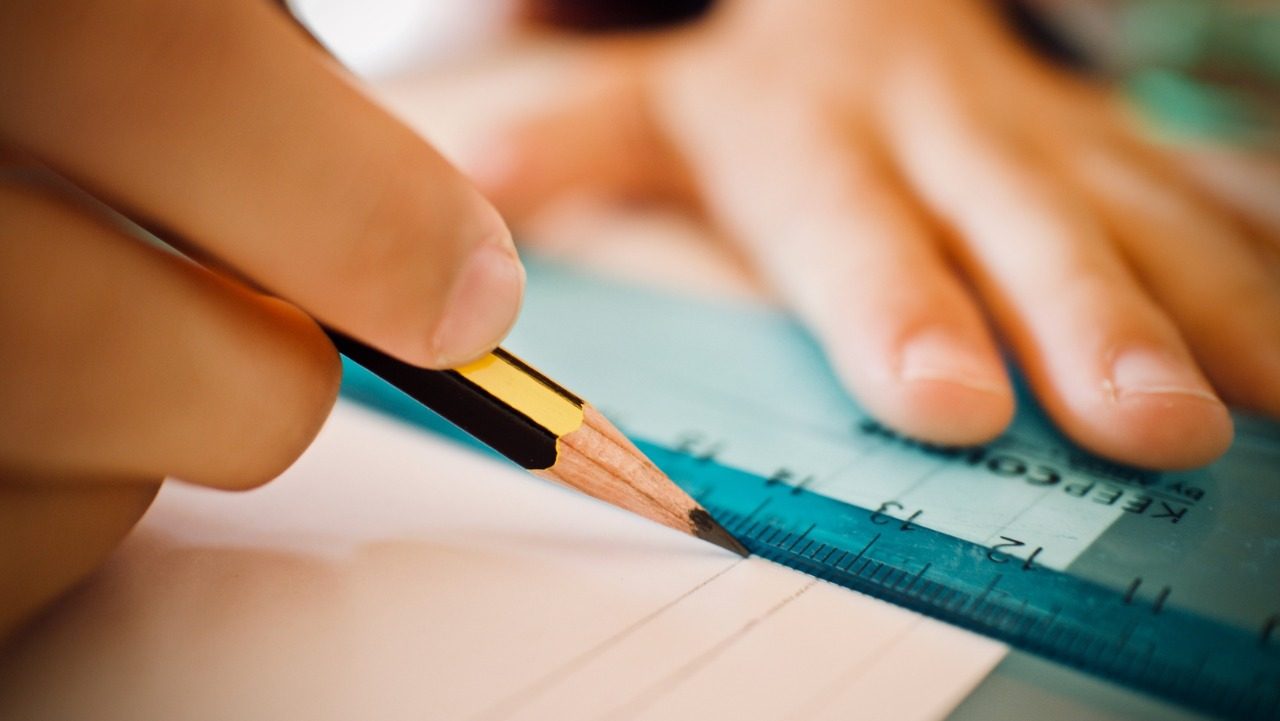
Measuring is one of those skills that school tends to reduce to a few pages in a workbook, but in practice it’s layered. A child who measures a piece of wood to cut it for a birdhouse is working with length, with fractions (half a centimeter, a quarter of an inch), and with the idea of tolerance: what’s close enough and what will cause the whole thing not to fit.
Scaling a project is harder. Ask a child to double a jewelry wire template or resize a mosaic from a 10×10 grid to a 15×15 grid, and you’ve introduced proportional reasoning without naming it. Most children work through trial and error before they could explain the algebra behind it, which is often the right order: learning the concept before the notation.
According to Australia’s Department of Education in their article on building a love of numbers in young learners, the most durable mathematical understanding comes from connecting numbers to real contexts. Craft projects are among the most accessible ways to create those contexts at home, using materials most families already have.
Pattern Recognition in Jewelry Making and Textile Work
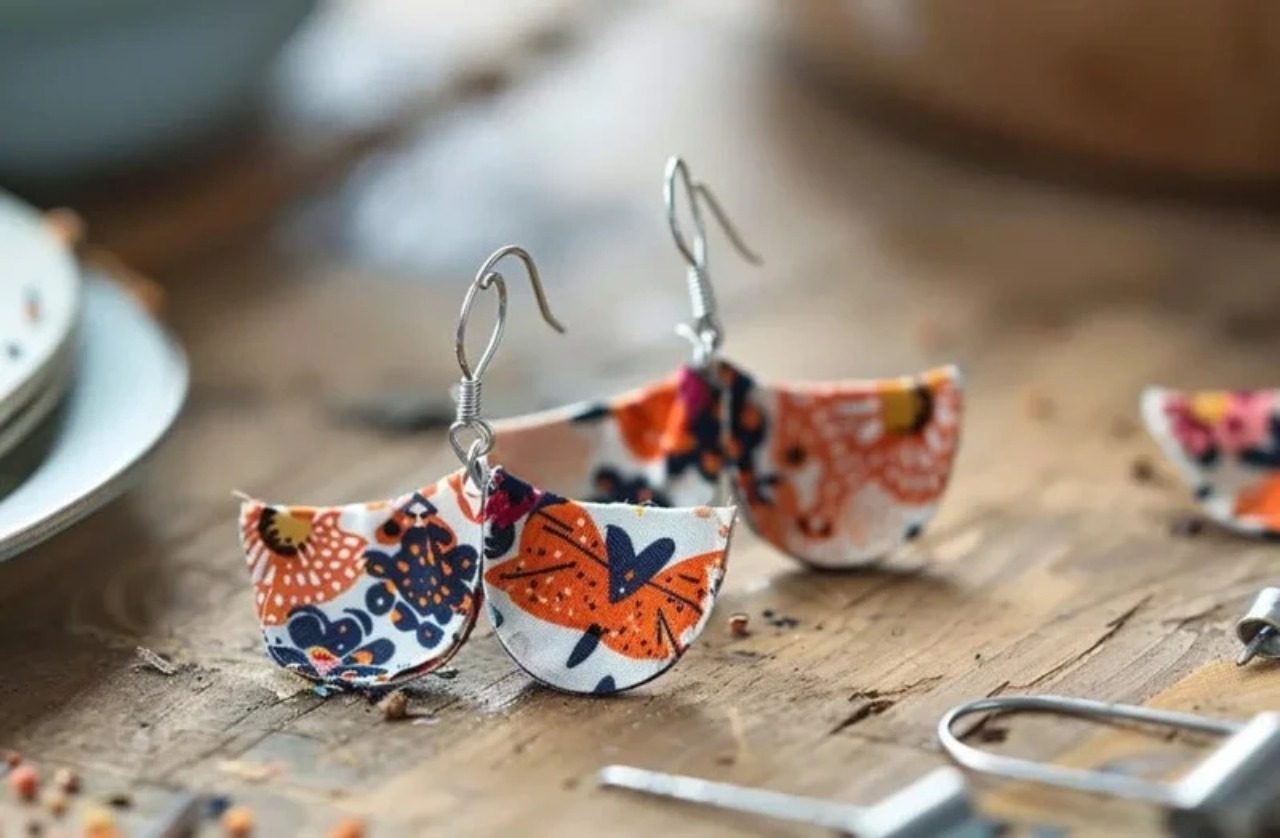
Patterns are the foundation of algebra, though that’s rarely how they get introduced. Before a child can understand what a variable represents, they need to be comfortable with the idea that a sequence can have rules, that those rules can be described, and that breaking them produces something wrong.
Jewelry making is genuinely good for this. A bracelet with alternating blue and green beads has a rule. A friendship bracelet with a chevron pattern has a more complex rule. A tile design for a coaster that uses rotation and reflection has a rule that touches on geometry. Kids who regularly work with these patterns tend to pick up the formal notation for sequences more quickly than those encountering the concept for the first time through symbols.
Textile work reinforces similar skills. The grid structure of cross-stitch maps almost directly onto coordinate geometry. A child who has spent hours counting squares to place a stitch develops an intuitive sense of axes and positions that takes other students much longer to build through formal instruction alone.
DIY Cooking and Baking as a Numbers Classroom
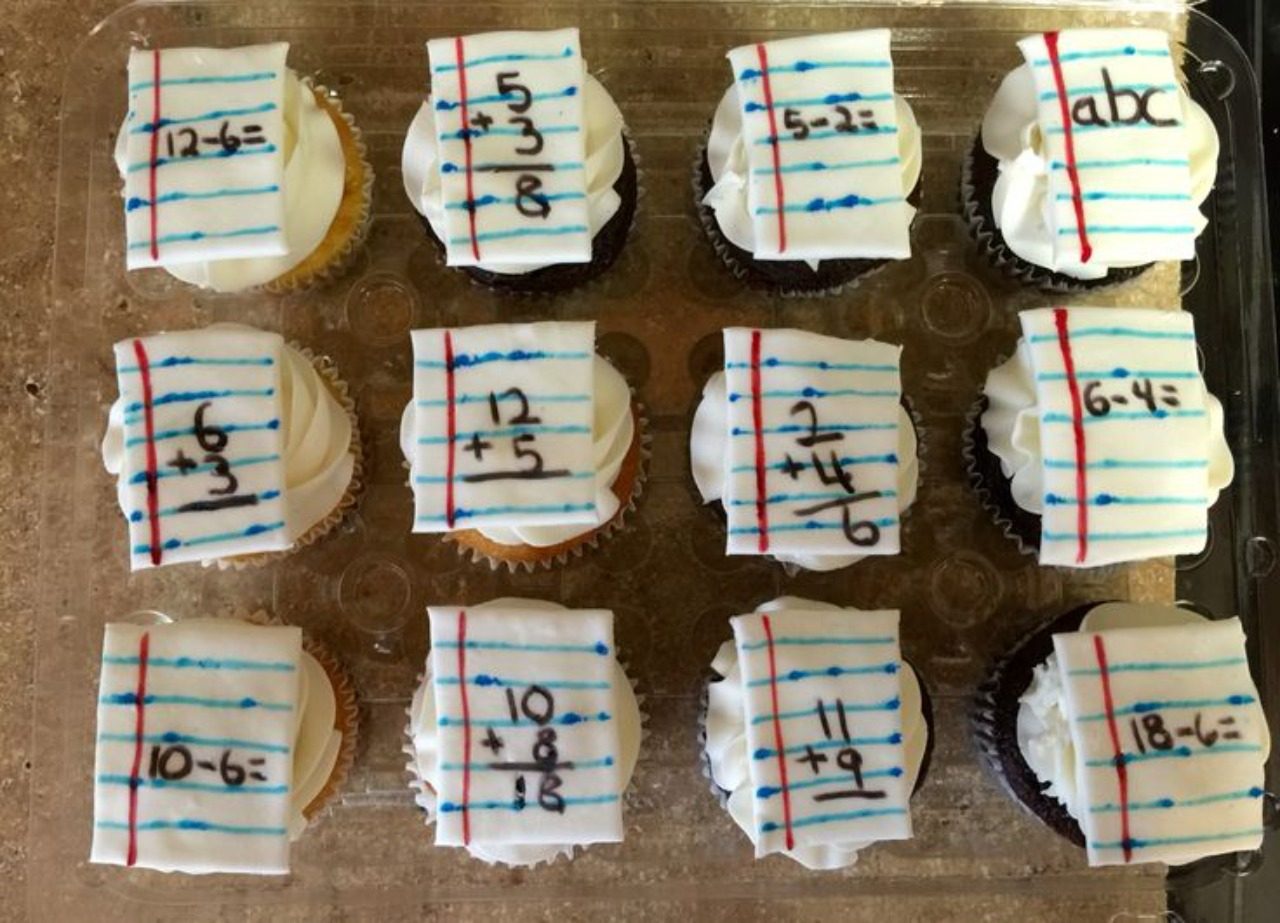
Baking has been used as a practical maths lesson for long enough that it risks becoming a cliché, but the reason it keeps showing up is that it works. Fractions become real when a child has to measure out three-quarters of a cup, and then needs to halve the recipe because there aren’t enough eggs. Temperature becomes meaningful when they learn what happens to a cake that goes in 10 degrees too hot.
The less obvious benefit is unit conversion. A recipe in grams adapted for a measuring set in milliliters, or an American recipe in cups translated to metric measurements, involves conversion problems that are genuinely difficult even for adults. Working through them in a kitchen context, with an immediate consequence (it won’t taste right), creates a motivation that no worksheet can replicate.
Cooking also involves time management. Staggering two dishes to finish at the same time requires working backwards from a target time, which is one of the trickier number line problems to teach directly. Kids figure it out in the kitchen because they have a reason to.
Knowing When Extra Support Makes Sense
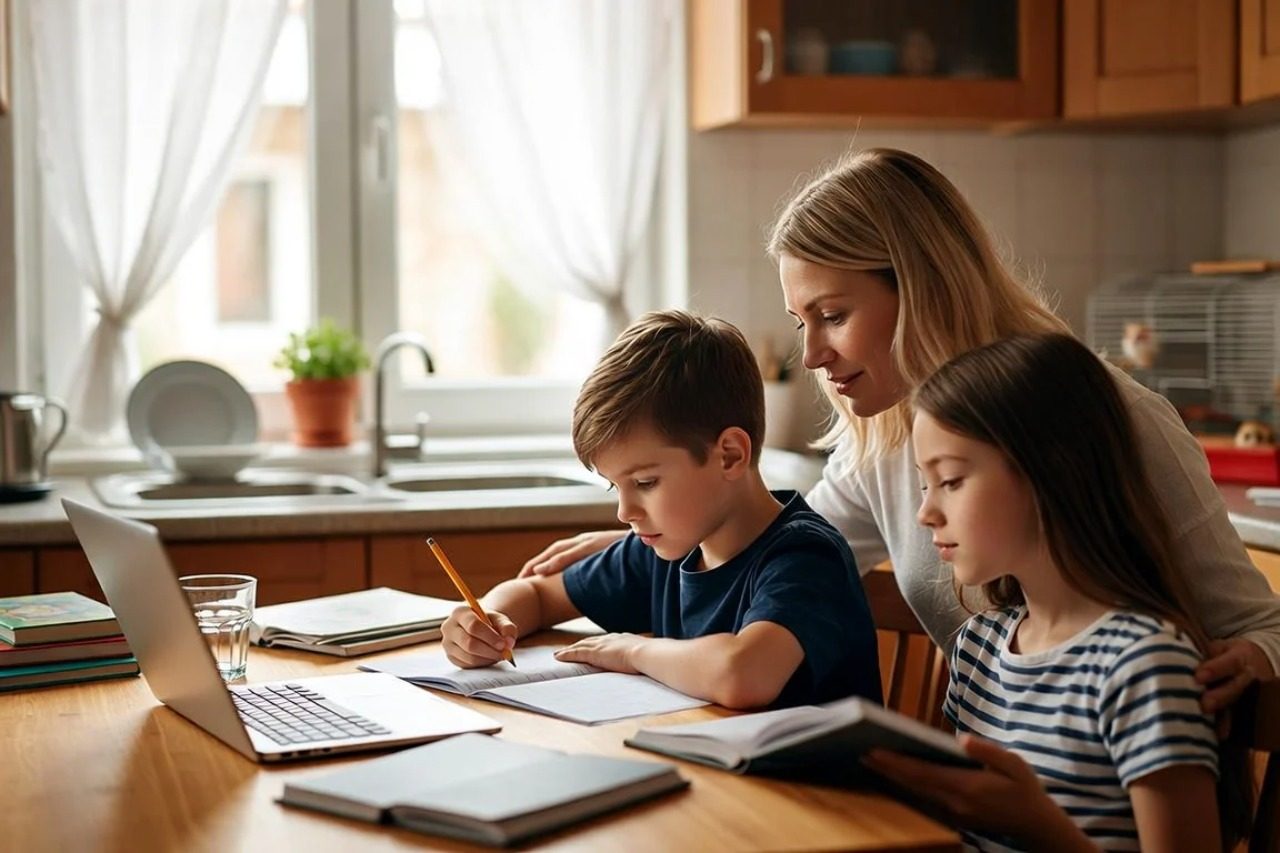
Not every child gets there through craft projects alone. Some kids have gaps in their foundational number sense that make even hands-on activities confusing rather than illuminating. If a child can sort and sequence physical objects but consistently freezes when the same concept appears as symbols, that gap is worth addressing directly.
Research published through the National Institutes of Health shows that the benefits of math activities are strongly shaped by the number knowledge children bring to them. A child with weaker foundational skills may need direct instruction alongside the hands-on experience, not instead of it, but as something that helps the physical activities make sense.
Parents who notice this often find that targeted tutoring (working through specific sticking points rather than reteaching everything at once) allows children to return to hands-on activities with considerably more confidence. The making stays enjoyable. The maths stops feeling like a foreign language. A few sessions that clear up a foundational confusion about fractions or place value can change how a child approaches a recipe, a measurement, or a pattern project entirely.
