

Precision in manufacturing no longer stops at dimensional accuracy. Today, product teams expect tooling to support clean part geometry, tighter visual standards, stable cycle times, and consistent output at scale. That shift has raised the value of mold design decisions that once sat in the background. Tooling now shapes product appearance, assembly performance, production efficiency, and the long-term economics of a program from the first design review to full-volume manufacturing.
Across advanced production environments, the pressure to deliver polished, repeatable parts keeps growing. Manufacturers associated with Beyonics SmartTech Manufacturing in Singapore often treat mold development as a strategic production priority. In that context, plastic tooling plays a direct role in aligning industrial design, material behavior, tool construction, and process control before small design choices turn into visible defects, waste, or costly rework.
Why Tooling Quality Now Carries More Design Weight
Plastic parts used to get more forgiveness on appearance. That is no longer the case in many sectors. Consumer devices, medical components, industrial interfaces, and automotive interiors all demand a cleaner finish and a more deliberate visual character. Even parts that sit inside an assembly often need stable geometry and surface quality because they affect fit, alignment, or downstream automation.
This change puts more pressure on tooling from the start. A mold does far more than create shape. It influences gate vestige, sink behavior, weld line placement, gloss consistency, parting line visibility, and texture fidelity. A strong tool design anticipates these outcomes instead of reacting to them after trial runs expose weak spots.
That is why modern tooling discussions now involve more than cavity count and cost. Teams want to know how the tool will support cosmetic standards, reduce variation, handle resin behavior, and protect long-term process capability. Better tooling decisions lead to better parts, fewer production compromises, and fewer design concessions later.
Surface Finish Has Become a Serious Engineering Variable
Aesthetic quality begins at the tool surface. That sounds obvious, but the implications run deep. Toolmakers now work more closely with product teams to match texture, gloss, matte effects, and fine-detail requirements to the intended resin and part geometry. A surface finish is no longer a late decorative choice. It is part of the engineering plan.
A polished cavity can help deliver a premium look, but it also affects ejection, scratch visibility, and resin flow behavior. A textured finish may hide minor cosmetic variation, yet it can also change draft requirements and increase the risk of drag marks if the design does not allow enough release. Good tooling work balances appearance with manufacturability instead of forcing one to fight the other.
This is where experience matters. Surface intent has to align with rib structure, wall thickness, shutoffs, gate location, and cooling. A part may look excellent in CAD and still fail to meet visual expectations in production if the tool does not support that finish consistently. The best results come from teams that treat aesthetics as a production variable, not a styling note.
Cleaner Part Geometry Starts With Smarter Mold Design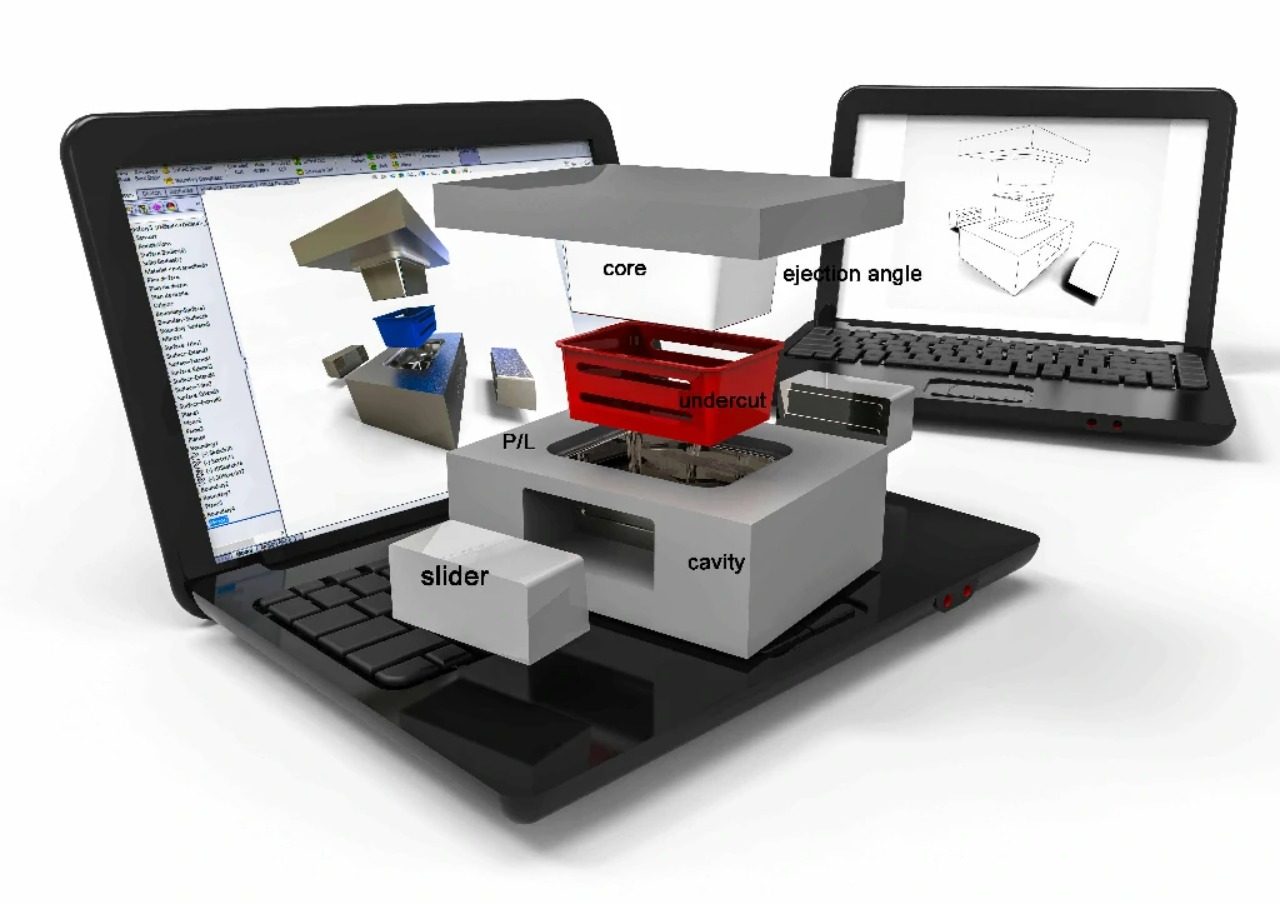
The market now favors parts that look simpler, tighter, and more refined. Ironically, producing that look often requires more sophisticated tooling. Thin walls, hidden attachment points, seamless transitions, and minimal visual interruption all place more demand on mold architecture. Good design has to work harder to make the final product look effortless.
Parting line control is a clear example. Designers want them hidden or reduced, especially on visible surfaces. That pushes toolmakers to think carefully about split direction, shutoff design, and feature placement. The same goes for ejector pin marks, gate location, and venting strategy. Each detail affects the final look, even when it seems minor during early planning.
Geometry refinement also supports function. Better rib design improves stiffness without creating sink on the show surface. Better boss layout helps assembly without distorting the part. Better cooling improves dimensional stability and reduces warp. In practice, the most elegant plastic parts come from tooling that solves both cosmetic and mechanical demands at the same time.
Multi-Material and Complex Part Strategies Are Reshaping Tool Expectations
Products have grown more complex. Many now combine rigid and soft-touch zones, clear and opaque sections, or multiple functional elements within one molded assembly. That has expanded interest in tooling strategies that support insert molding, overmolding, and highly integrated part designs. The goal is clear: reduce secondary operations while improving product feel and performance.
These programs place greater demands on mold precision and repeatability. Tool alignment, material sequencing, venting, and thermal control all become more critical when different materials or inserts must work together inside the same process window. A small deviation can affect bond quality, flash risk, alignment, or final appearance.
The appeal is strong because the payoff can be substantial. Well-executed tooling for complex molded parts can reduce assembly labor, improve ergonomics, strengthen sealing performance, and create a more premium finished product. Still, those gains only happen when the tool gets built with the full production picture in mind. Complexity in the part requires discipline in the mold.
Digital Validation and Process Feedback Are Improving Tool Decisions Earlier
Tooling teams no longer need to wait for steel to learn where the risks are. Mold flow analysis, thermal simulation, and production data feedback now help shape smarter decisions before cutting begins. This does not remove every production surprise, but it improves the odds of getting closer to the target faster and with fewer expensive corrections.
Early simulation helps teams predict fill patterns, pressure demands, air traps, weld lines, cooling imbalance, and shrink behavior. That gives engineers a stronger basis for choosing gate locations, wall transitions, runner layouts, and cooling channel strategies. It also helps align the expectations of designers, tooling engineers, and manufacturing teams before trade-offs become painful.
The value continues after launch. Process data from sampling and production can feed back into tooling improvements for future programs. Teams can spot recurring issues tied to venting, wear zones, thermal inconsistency, or resin sensitivity. Over time, this creates a more disciplined tooling culture, one built on measured performance rather than assumptions.
Tool Durability and Maintenance Now Influence Product Quality More Directly
A mold that produces excellent parts in the first month but drifts over time is not a strong production asset. As visual standards rise and tolerances tighten, long-term tool durability matters more. Manufacturers now look harder at steel selection, wear resistance, coating options, maintenance access, and component standardization because all of them affect part consistency.
This matters most in high-volume or high-precision environments. Repeated cycling puts pressure on shutoffs, slides, vents, ejector systems, and textured surfaces. If those areas degrade too quickly, the result may show up as flash, cosmetic inconsistency, dimensional drift, or unplanned downtime. In other words, maintenance is not separate from quality. It supports quality every day.
Well-planned tooling makes maintenance easier and more predictable. Replaceable wear components, smart access points, and documented service intervals help protect both uptime and part quality. Strong tool programs account for the full operating life of the mold, not only the launch phase. That approach lowers total production risk and supports more reliable delivery over time.
The Strongest Tooling Programs Bring Design, Production, and Quality Together
Plastic tooling performs best when teams stop treating it as a handoff between departments. Product design, tool design, material selection, processing, and quality control all influence the same outcome. If these groups work in isolation, the mold often carries unresolved conflicts into production. If they work together early, the tool becomes a problem-solving platform instead of a source of compromise.
That collaboration is now one of the clearest trends in advanced manufacturing. Design teams want visual precision. Manufacturing teams want repeatability and speed. Quality teams want stability and traceable control. A refined tooling strategy can support all three, but only when the program aligns around realistic production goals from the beginning.
The future of plastic tooling will likely bring more automation, tighter digital integration, and higher expectations for both appearance and performance. Still, the core principle will stay the same. Strong tooling creates strong manufacturing outcomes. When a mold is engineered with care, discipline, and production insight, it does far more than form plastic. It helps shape a better product, a better process, and a more resilient operation.
